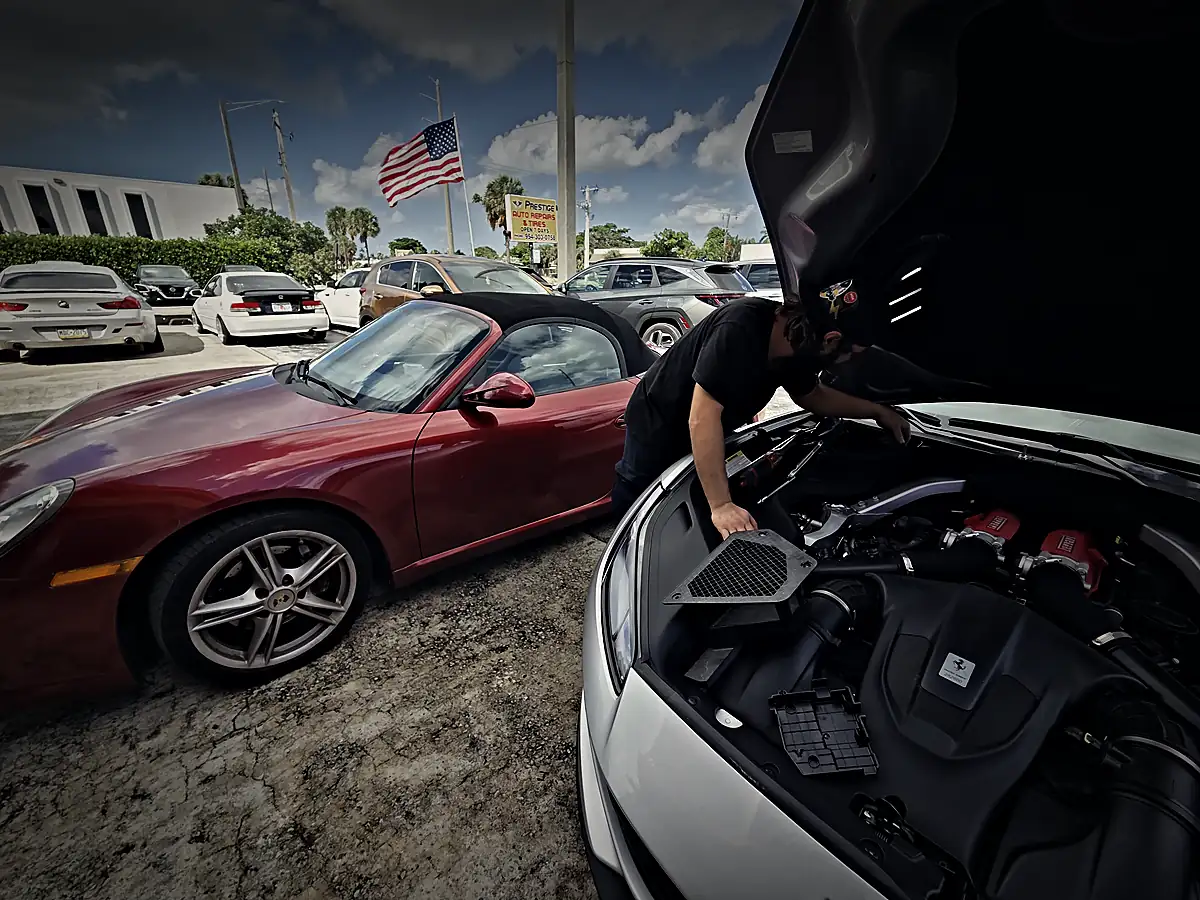
Fort Lauderdale is hard on cars. Heat, humidity, salt air near the beach and slow traffic on Federal Hwy and Las Olas all speed up wear. The same few problems show up again and again, especially on European cars built for cooler climates.
Here are the most common issues we see, what usually causes them and how they get fixed.
Overheating and coolant leaks
Cooling systems work hardest here. Many European engines use plastic parts that become brittle after years of heat cycles.
Common failure points:
- Expansion tanks and coolant hoses on BMW N20, N55 and B58 engines
- Water pumps and thermostat housings on Audi and VW 2.0T engines
- Coolant pipes and the thermostat on Mercedes-Benz turbo four- and six-cylinder engines
- Radiators clogged with debris or corroded by salt air near A1A
Signs: a sweet smell, pink, blue or green drips under the front, a low coolant warning or a gauge that climbs in traffic. A pressure test finds the leak before it becomes an overheating event that can warp a cylinder head. Our coolant leak repair page covers this in more detail.
Dead or weak batteries
Heat wears batteries out faster than cold does. Modern luxury cars also draw power while parked for alarms, telematics and modules. When a battery gets weak, you may see random warning lights before the car fails to start.
On BMW, Mercedes, Audi and many other models, a new battery must be registered to the car so the charging system treats it correctly. Skipping that step shortens the life of the new battery.
A/C that will not cool
Leaking condensers, failing compressors and condenser fan faults top the list. A system that runs constantly for most of the year wears out faster. A proper diagnosis checks pressures, looks for leaks and reads climate system codes before any refrigerant goes in.
Check engine lights and misfires
A check engine light can mean anything from a loose fuel cap to a failing ignition coil. Common causes on European cars include:
- Ignition coils and spark plugs on turbo engines
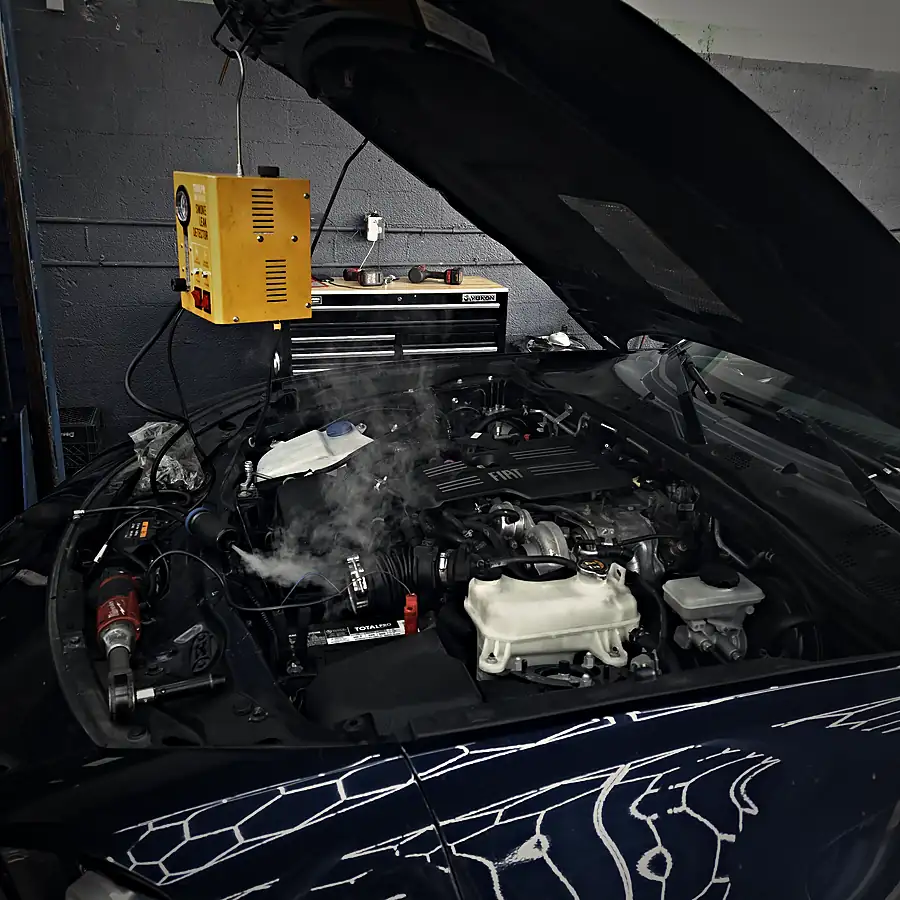
- Vacuum and boost leaks, which we find with a smoke test
- EVAP system leaks
- Oxygen and air-fuel sensors
- Carbon buildup on direct-injection engines
We read the codes with factory-level tools such as BMW ISTA and Mercedes XENTRY, then test the suspect part before replacing anything.
Oil leaks
Heat hardens rubber gaskets. Valve cover gaskets and oil filter housing gaskets on BMWs, and oil cooler and timing cover seals on many other makes, are frequent leak points. A small leak matters because oil can drip onto belts, wiring and hot exhaust parts.
Brakes and rotors
Stop-and-go traffic on US-1 and I-95 wears pads and rotors quickly, and humidity corrodes caliper slide pins. Squealing, grinding, vibration or a wear light all deserve a check.
Electrical problems after heavy rain
Flooding season can push water into footwells, trunks and connectors. That leads to strange electrical faults, failing modules or windows that will not work. Early drying and inspection limit the damage.
How we diagnose before we repair
- You describe the symptom, when it happens and anything recent, such as new parts or a pothole strike.
- We scan all modules, road test and inspect the car.
- We photograph each finding and send a written estimate to your phone.
- You approve the work before anything is replaced.
This approach avoids replacing parts on guesswork, which is where repair bills grow.
A simple maintenance habit for Fort Lauderdale drivers
- Check coolant level and tire pressure monthly.
- Have the battery tested once a year, especially after it is three years old.
- Replace the cabin filter regularly for better A/C airflow.
- Follow your car’s service indicator for oil and brake fluid.
Get a clear diagnosis
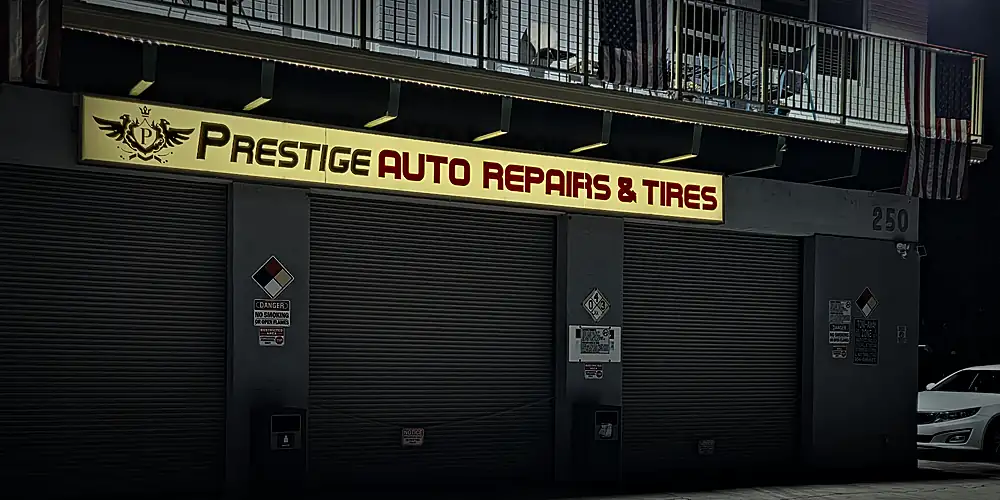
Prestige Auto Repairs & Tires has shops at 930 NE 4th Ave in Fort Lauderdale and 250 NE 44th St in Oakland Park, both open 7 days, 8 AM – 7 PM. Learn about our check engine light and diagnostics service, or request an estimate and describe what your car is doing.