Steering and suspension symptoms
- Clunks or knocks over bumps, speed humps and driveway lips
- Wandering on the highway, so you keep correcting the wheel on I-95
- Steering wheel off center or a pull to one side
- Shimmy or vibration at highway speed or under braking
- Uneven tire wear, such as worn inner edges on the front tires
- A heavy or notchy steering feel, or an “EPS” or “steering fault” message
- A bouncy or floaty ride after bumps, from tired shocks or struts
- Suspension fault messages on cars with adaptive dampers
How we diagnose suspension problems
- Road test. We drive the route that makes the noise, at the speed you describe.
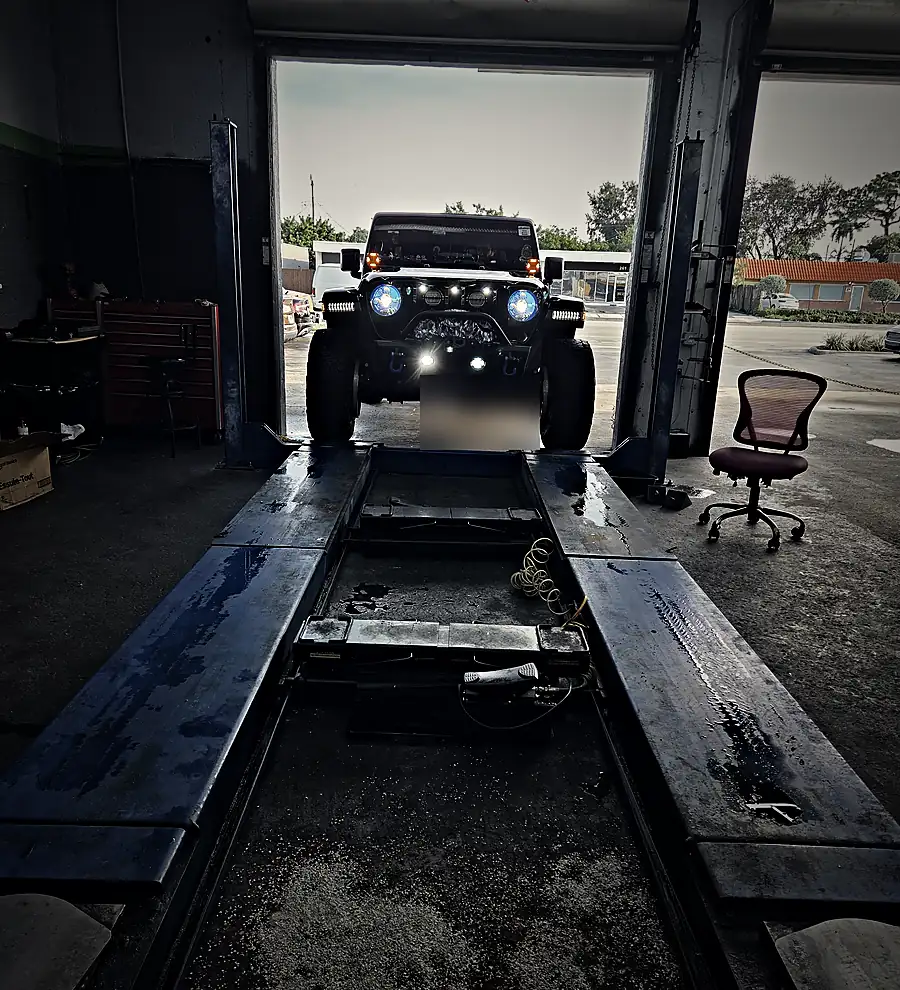
- Lift inspection. With the weight off the wheels, we check ball joints, tie rod ends, wheel bearings and bushings for play. We use a pry bar and stethoscope to pin down noises.
- Scan. On cars with adaptive dampers, active roll control or electric power steering, we read the chassis modules with factory-level software.
- Measure. We check ride height and look at tire wear patterns, which tell us which parts have been out of line and for how long.
- Photos and estimate. You see the torn boots, cracked bushings and leaking shocks before you approve any work.
What we repair
- Control arms, thrust arms and bushings, including hydraulic bushings that leak fluid
- Ball joints, tie rods and inner tie rod ends
- Shocks, struts, coil springs and strut mounts
- Adaptive dampers: Porsche PASM, BMW EDC and adaptive M suspension, Mercedes ADS, Audi magnetic ride
- Sway bar links, bushings and active roll control such as BMW Dynamic Drive and Porsche PDCC
- Electric power steering racks, columns and calibration
- Wheel bearings, hubs, CV axles and drive shafts
Brand-specific notes
- BMW: Front thrust arm bushings and lower control arms on 3 Series, 5 Series and X5 models wear early and cause shimmy under braking.
- Mercedes-Benz: Front lower control arms and tie rods on C-Class, E-Class and GLE models are common wear items. Older S-Class and SL models may use ABC hydraulic suspension, which we also diagnose.
- Audi and VW: Multi-link front suspensions have several upper arms per side. Worn upper arms cause creaks and clunks at low speed.
- Porsche: Cayenne and Macan control arms and Panamera links take heavy loads. PASM dampers must be calibrated after replacement.
- Exotics: Many Ferrari, Lamborghini and McLaren models use a front nose lift. We check the lift system and its hoses during any suspension visit.
- Tesla: Model S, Model X and Model 3 upper control arms are a known clunk source.
Why South Florida roads wear suspension
Broward is flat, but it is not gentle. Construction zones on I-95 and US-1, patched lanes on Oakland Park Blvd and speed humps in neighborhoods load bushings again and again. Heat and UV dry out rubber boots and bushings faster. Salt air near A1A and the beach rusts sway bar links and strut hardware. Low-profile tires on 20-inch wheels pass every impact straight into the suspension, which is why we see so many worn parts on luxury SUVs here.
What to expect on your visit
Walk in at either shop or book ahead. Tell us where and when you hear the noise. We road test, inspect on a lift, and send photos with a written estimate before any work. After the repair we align the car when geometry has changed and road test it again. Repairs are backed by our 2-year / 24,000-mile warranty.