Brake symptoms you should not ignore
- High-pitched squeal when braking, often the wear indicator or glazed pads
- Grinding or scraping, which usually means metal on metal and a damaged rotor
- A pulsing or vibrating pedal, from uneven rotor thickness or pad deposits
- A soft or sinking pedal, a sign of air, moisture in the fluid or a leak
- Pulling to one side when you brake, often a sticking caliper or slide pin
- Warning lights for brake pads, brake fluid, ABS or the electronic parking brake
- Heavy brake dust on one wheel only, which can point to a dragging caliper
How we inspect and repair brakes
- Road test and scan. We check pedal feel and read ABS, ESP and parking brake modules for stored faults.
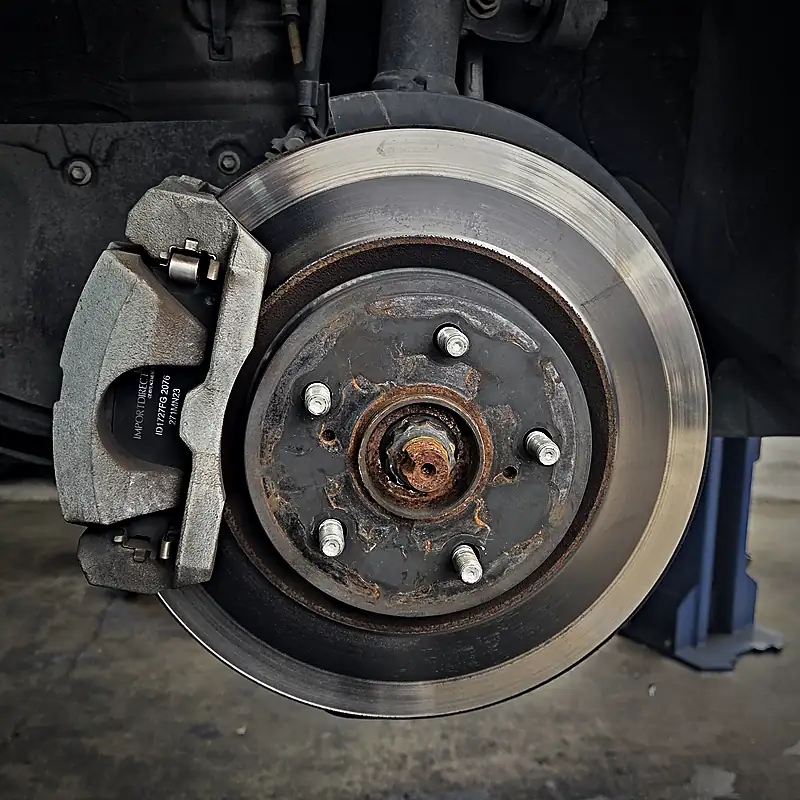
- Measure, then photograph. With the wheels off, we measure pad thickness and rotor thickness against the minimum stamped on the rotor, and check for runout.
- Check the hydraulics. We look at hoses, lines and calipers for leaks and test fluid moisture.
- Written estimate. You get photos and a line-by-line estimate before any work.
- Repair to spec. New pads and rotors are torqued to spec, new wear sensors are fitted where needed, and the service reminder is reset.
- Bed-in and verify. We bed in the pads on a road test so they grip evenly from the first stop.
Brand-specific brake notes
Electronic parking brakes
Most newer BMW, Mercedes, Audi, VW, Volvo and Land Rover models have an electronic parking brake. The rear calipers must be put in service mode with a scan tool before the pistons can be retracted. Forcing them can damage the motor.
Brake fluid and ABS bleed
European makers specify DOT 4 or DOT 4 LV fluid. On many cars a full flush needs the ABS pump cycled with factory-level software so old fluid does not stay trapped in the module.
Carbon-ceramic and big brake kits
Porsche PCCB, Audi and Lamborghini carbon-ceramic rotors and AMG ceramic brakes last a long time but are sensitive to chips and heat damage. We inspect, weigh where the maker calls for it, and use the correct pads.
Teslas and other EVs
Regenerative braking means Tesla, Rivian and Lucid pads can last a long time, but calipers and slide pins can seize from lack of use. We clean and lubricate them during service.
Pad and rotor choices
| Option | Good for |
|---|---|
| OEM pads and rotors | Factory feel and noise level |
| Low-dust ceramic pads | Daily drivers that hate black wheels |
| Performance pads | Track days and spirited driving on AMG, M and RS models |
| Carbon-ceramic service | Porsche, Ferrari, Lamborghini, McLaren and AMG ceramic brakes |
We use OEM or OE-equivalent parts from brands such as Brembo, Zimmermann, ATE and Textar.
Why brakes wear differently in South Florida
Stop-and-go traffic on I-95, US-1 and Sunrise Blvd wears pads quickly. Salt air near the beach and A1A rusts rotor surfaces and caliper slide pins, especially on cars that sit for a week. Humidity pulls water into brake fluid, which lowers its boiling point. Heavy summer rain also tests worn pads and tires at the same moment, so we check both on every brake visit.
What to expect on your visit
Walk in at either shop or book ahead. We inspect the brakes, send photos and a written estimate, and start work only after you approve. Repairs carry our 2-year / 24,000-mile warranty. Spanish-speaking drivers can read our brake page in Spanish.