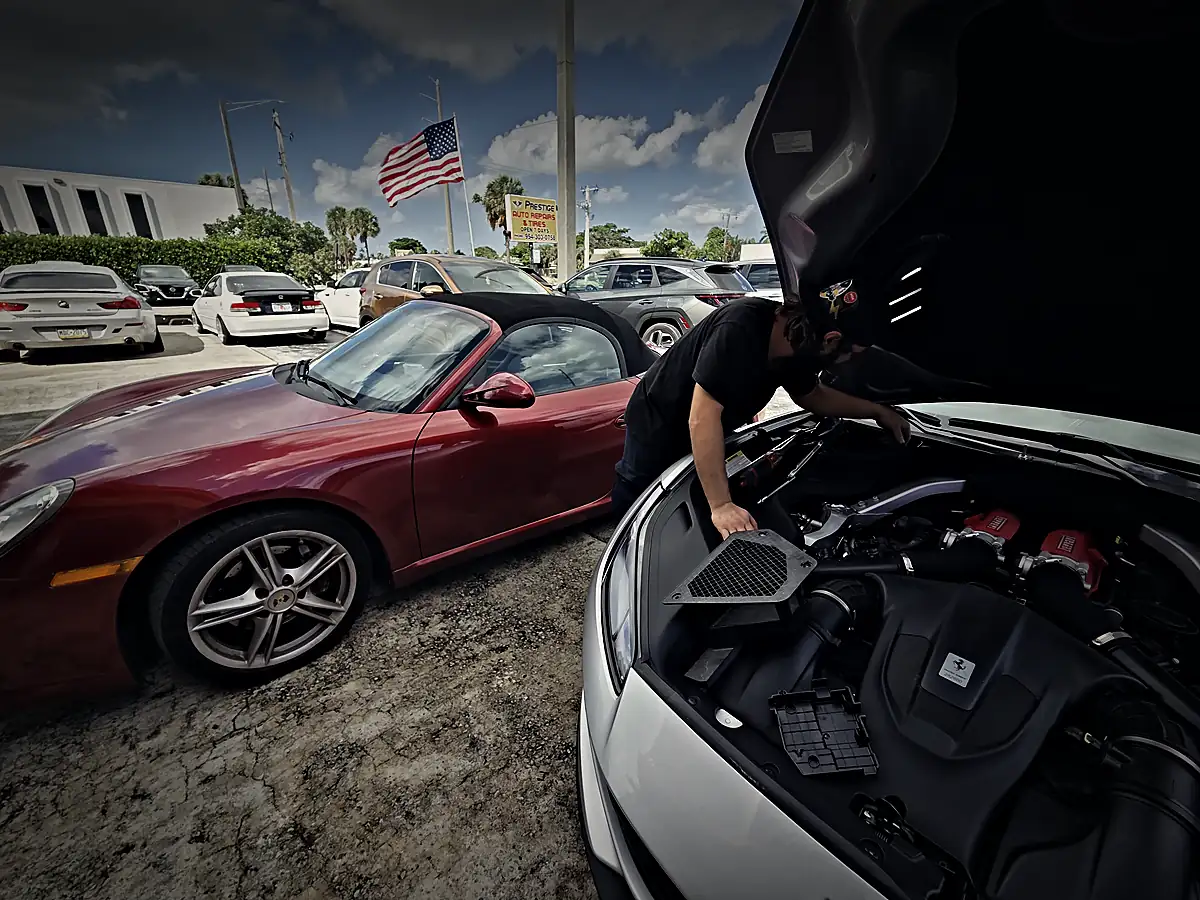
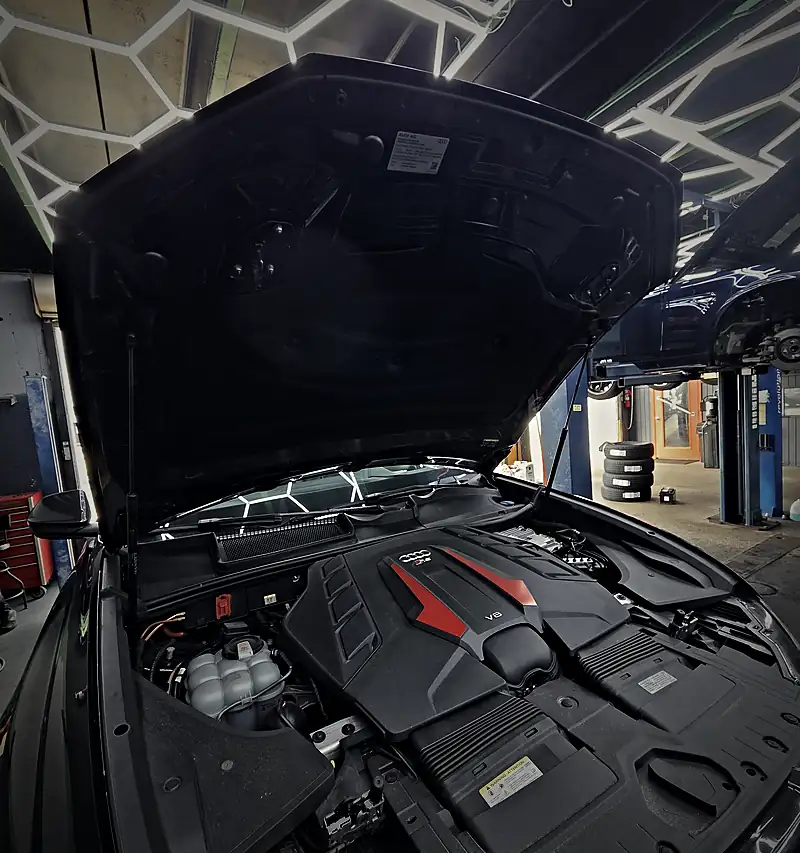
Most people think of the A/C and the engine cooling system as two separate things. One keeps you comfortable, the other keeps the engine alive. Under the hood, they are closely linked. They share airflow, a fan, space at the front of the car and, on many models, a drive belt. A problem in one often shows up in the other.
That is why an A/C inspection is also one of the easiest ways to catch cooling system trouble before it becomes an overheated engine.
How the A/C and engine cooling share space
Open the hood and look behind the grille. You will usually see a stack of heat exchangers:
- A/C condenser at the front, releasing heat from the refrigerant
- Radiator behind it, releasing heat from the engine coolant
- Charge air or intercooler radiators on many turbo cars
- Electric cooling fan behind the whole stack
Air passes through the condenser first. If the condenser is blocked or the A/C is running at very high pressure, the air reaching the radiator is already hot. In slow traffic on Oakland Park Blvd in August, that can be the difference between a normal gauge and an overheating warning.
The shared cooling fan
On most modern cars, one large electric fan serves both systems. The engine computer turns it up when either coolant temperature or A/C pressure rises.
When that fan or its control module starts to fail, the first sign is often warm A/C at idle that turns cold once you are moving. Many drivers ignore it. Yet that same fan protects the engine in traffic. A fan fault caught during an A/C check is a cooling system fault caught before the engine overheats. Fan modules on many BMW, Mercedes-Benz and Audi models are known wear items in hot climates.
Debris and salt air
The front of the car collects bugs, leaves, sand and road grime. Near the beach and along A1A, salt air also corrodes thin aluminum fins. Over time, the gaps between the condenser and radiator fill with debris that you cannot see from the outside.
An inspection checks both cores, and a careful cleaning between them can restore airflow to the A/C and the engine at once.
Compressor load and the drive belt
On engines with a belt-driven compressor, the A/C adds load to the same belt that may drive the alternator and, on some engines, the water pump. A compressor with worn bearings or a seized clutch can wear or snap the belt. If the belt also turns the water pump, coolant flow stops and the engine heats up quickly.
During an A/C inspection we listen to the compressor, check the belt and tensioner and look for drag.
The heater core and blend doors
Your heater core is part of the engine cooling system and sits inside the dash. A leaking heater core can cause:
- A sweet smell inside the car
- Fog on the inside of the windshield
- Slow coolant loss with no leak visible under the car
Since the A/C and heat share the same air box, these signs often come up during an A/C check.
What the cooling side of an A/C inspection checks
| Item | Why it matters |
|---|---|
| Fan operation at low and high speed | Protects both A/C and engine in traffic |
| Condenser and radiator airflow | Debris raises temperatures for both systems |
| Coolant level and condition | Low or worn-out coolant reduces protection |
| Cooling system pressure test | Finds leaks at hoses, tanks, pump and heater core |
| Live coolant and refrigerant data | Shows how the systems behave under load |
| Belt and tensioner | A failed belt can stop the water pump on some engines |
EVs: the A/C cools the battery too
On many EVs, the A/C is part of battery thermal management. A chiller uses the A/C refrigerant to cool the battery and inverter coolant. Tesla’s heat pump systems, along with Rivian and Lucid designs, rely on this during hot weather and fast charging. An A/C fault on these cars can mean slower charging and reduced power, so an inspection protects far more than cabin comfort.
Book an A/C and cooling inspection in Oakland Park
Our Oakland Park shop at 250 NE 44th St and our Fort Lauderdale shop at 930 NE 4th Ave both inspect A/C and cooling systems together, 7 days a week. If you need to drop off after hours, the Oakland Park lot is open 24 hours with a key drop box at the front door, and we call you in the morning. Learn more about our car A/C repair service, read about coolant leak repair, or request an estimate.