A car that is out of alignment does not usually feel dramatic. It drifts a little, the steering wheel sits slightly crooked and the tires wear out early. Many drivers get used to it. Yet alignment affects how your car tracks, how long your tires last and how stable it feels at speed on I-95.
This guide covers the everyday driving problems that a proper wheel alignment fixes, and the ones it does not.
What an alignment actually adjusts
An alignment sets the angles of your wheels relative to the car and to each other. There are three main angles:
| Angle | What it is | When it is wrong |
|---|---|---|
| Toe | Whether the wheels point in or out, seen from above | Fast, feathered tire wear and a twitchy or vague feel |
| Camber | Whether the tops of the tires tilt in or out | Wear on the inner or outer edge, pulling |
| Caster | The forward or backward tilt of the steering axis | Weak return to center, wandering at speed |
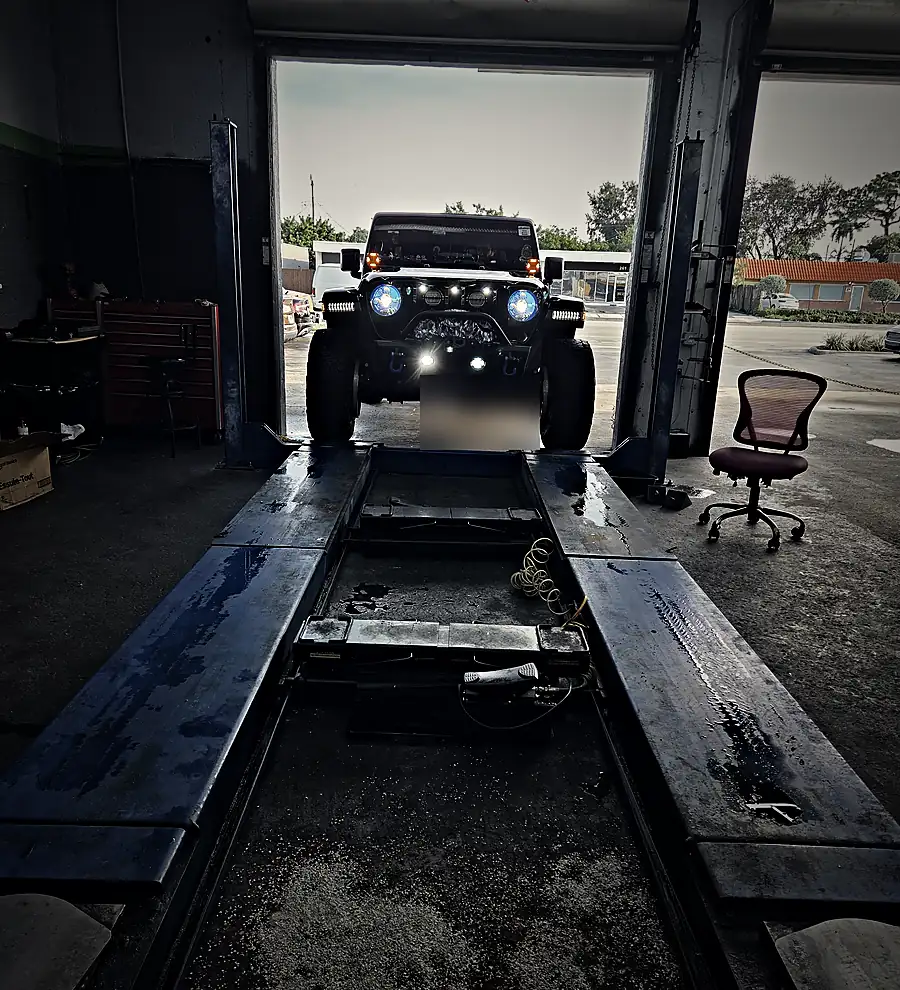
On a modern four-wheel alignment, the technician measures all four wheels and adjusts them to the factory specification for your exact model.
Problem 1: The car pulls or drifts
If you have to hold the wheel slightly to one side to go straight, the alignment is the first thing to check. Uneven camber or caster between the left and right sides is a common cause. Keep in mind that Broward roads are crowned to shed rain, so a gentle drift toward the curb on some streets is normal. A pull that stays on flat, straight roads is not.
Problem 2: The steering wheel is off-center
A wheel that sits tilted when you drive straight usually means the toe is out of balance side to side. It often happens after a hard pothole hit or a curb strike, or after steering parts are replaced. On cars with lane-keep assist, an off-center wheel can also confuse the steering angle sensor.
Problem 3: Tires wear unevenly or too fast
Your tires are the clearest record of alignment trouble:
- Wear on one edge points to camber.
- Feathered tread that feels smooth one way and sharp the other points to toe.
- Patchy, cupped wear usually means worn shocks or struts, which an alignment will not fix.
On performance tires for a Porsche 911, a BMW M3 or an Audi RS model, even a small toe error can wear out a set of tires much sooner than expected.
Problem 4: Wandering or a loose feel at highway speed
A car that needs constant small corrections on I-95 or the Turnpike may have low caster, too much toe or worn steering parts. An alignment check shows which, because the technician has to inspect the suspension before setting the angles.
What alignment does not fix
Some symptoms feel similar but have other causes:
- Shaking at 60 to 70 mph: wheel balance, a bent wheel or a tire with a broken belt
- Clunks over bumps: worn control arm bushings, ball joints or sway bar links
- Car leans or sags at one corner: a suspension fault, including air suspension on Mercedes AIRMATIC, Range Rover and Audi models
A good shop tells you this before aligning the car. Setting angles on worn parts only gives a short-lived fix.
Rotation, balance and alignment work together
Alignment keeps the tires pointing straight. Balancing keeps them spinning smoothly. Rotation, where your car allows it, evens out wear between axles. Doing all three on a regular schedule is the simplest way to get full life from a set of tires. Cars with staggered sizes, such as many Porsche, Ferrari and BMW M models, cannot rotate front to rear, which makes accurate alignment even more important.
After the alignment: driver-assist systems
Many newer European cars and EVs, including Tesla, use cameras and radar for lane keeping and adaptive cruise. After an alignment, some need a steering angle reset or a camera calibration so the systems aim correctly. We check this as part of the job.
Book an alignment check
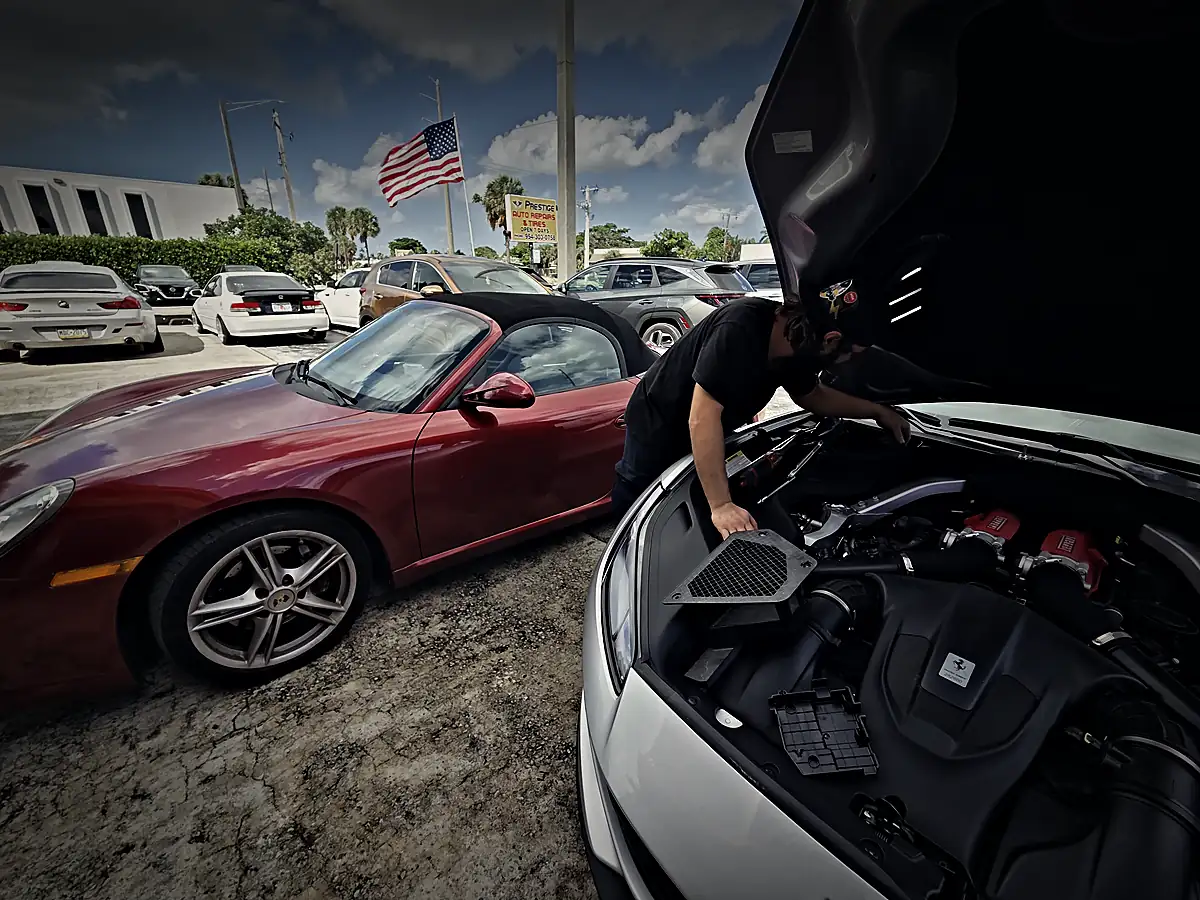
Prestige Auto Repairs & Tires measures and adjusts alignment to factory specs at both our Broward shops, with a printout of before and after readings and photos of any worn parts. Learn more about our tires and wheel alignment service, or request an estimate and tell us how your car is driving.